“That’s not a knife. This is a knife.” One line from a 1986 film turned a massive fixed-blade tool into a pop culture icon. Nearly four decades later, people still search for the exact blade Paul Hogan pulled in that Sydney alley scene.
If you’re curious about the Crocodile Dundee bowie knife, you’re in the right place. This guide covers where it came from, what sets it apart, and how to choose a replica that actually holds up in the field.
Here’s what you’ll learn:
- The real history behind the knife and the movie moment that made it famous
- The features that define an authentic-looking replica, from blade length to handle material
- How to pick the right knife for hunting, camping, or collecting
- Simple care steps that keep the blade sharp for years
Where Did the Crocodile Dundee Bowie Knife Come From?
The knife didn’t start with the movie. It goes back to the original bowie knife, a design tied to American frontiersman Jim Bowie in the early 19th century. His brother Rezin Bowie is often credited with the first version, and it quickly earned a reputation as both a fighting blade and a rugged all-purpose tool for hunters and pioneers.
Fast forward to 1986. In Crocodile Dundee, Paul Hogan played Mick “Crocodile” Dundee, an Australian bushman who pulls an oversized bowie knife on a would-be mugger. The scene was funny, memorable, and instantly quotable. It also put a spotlight on the massive clip-point blade he carried.
That single moment sparked a global surge in bowie knife interest. Suddenly, everyone wanted a blade with that same commanding presence. The “Crocodile Dundee bowie knife” became shorthand for a big, dramatic, do-everything survival knife.
In short: The design is centuries old, but the film gave it a name and a legend that still sells today.
What Makes the Crocodile Dundee Bowie Knife Unique?
A true Dundee-style knife stands out the moment you hold it. It’s bigger and bolder than a standard hunting knife, and every part of it is built for hard use.
Blade Length and Shape
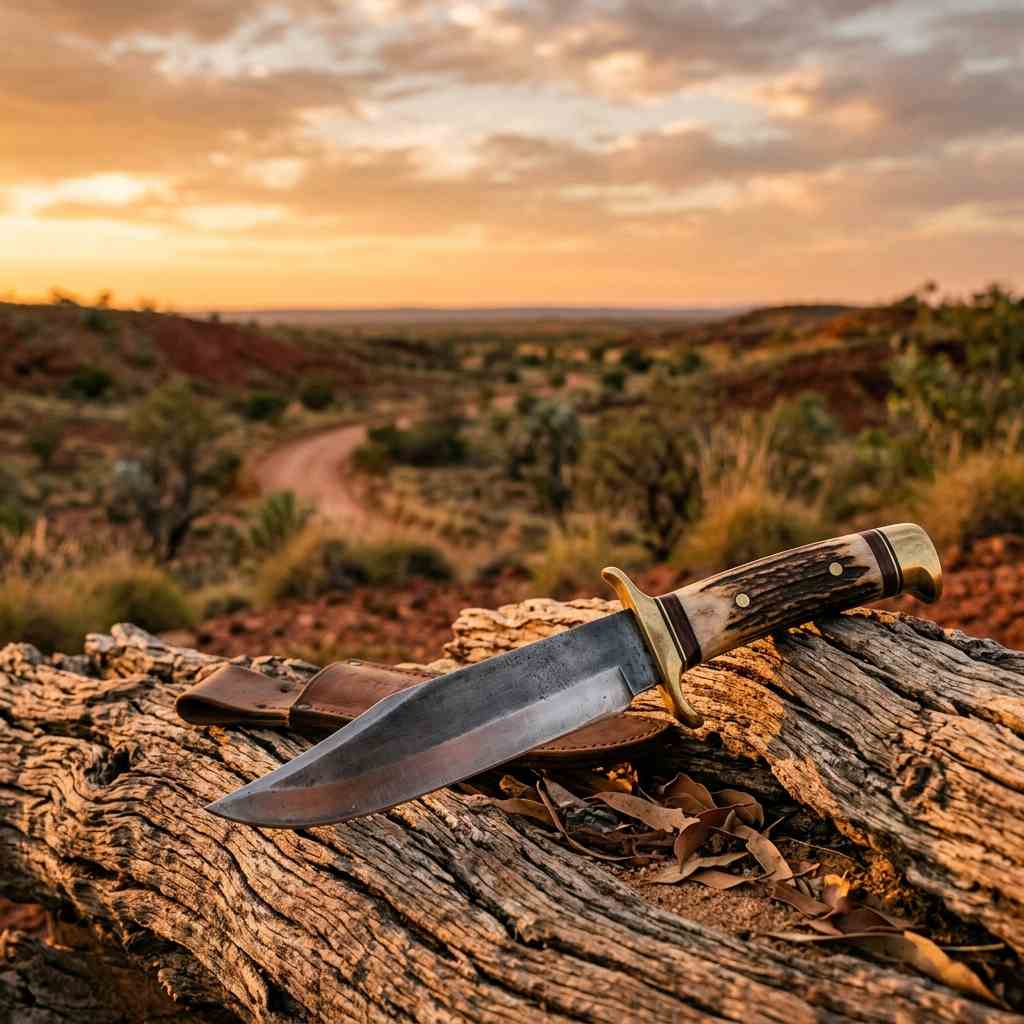
Most Crocodile Dundee bowie knives run between 10 and 15 inches in blade length, with some full builds pushing past 16 inches overall. That size gives you serious reach and chopping power. The classic clip-point tip keeps it useful for detail work like skinning game, while the wide belly handles heavier cutting tasks.
Full-Tang Construction
Authentic versions use full-tang construction, meaning the steel runs the entire length of the handle. This matters more than looks. A full tang won’t snap under pressure when you’re batoning wood or prying something loose. It’s the difference between a knife that survives a trip and one that fails halfway through.
Steel Types That Hold an Edge
Blade steel decides how well your knife performs and how long it stays sharp. The most common choices for these knives include:
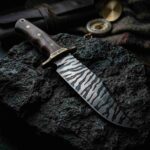
- Damascus steel – layered, patterned, and prized for both strength and looks
- D2 steel – a tool steel known for excellent edge retention and wear resistance
- High carbon steel – tough, easy to sharpen, and a favorite for hard outdoor tasks
Each option has trade-offs. Damascus turns heads and holds an edge well. D2 resists dulling through heavy use. High carbon steel takes a razor edge and sharpens fast in the field.
Handle Materials
The handle affects grip, balance, and character. Traditional Dundee-style knives use natural materials such as:
- Stag horn – rugged, textured, and full of old-world appeal
- Wood – warm, classic, and comfortable for long sessions
- Leather stacked washers – shock-absorbing and easy on the hand
Many builds also add a brass guard, which protects your hand and completes that authentic frontier look.
In short: Big blade, full tang, quality steel, and a natural handle. That combination is what separates a real Dundee-style knife from a cheap wall-hanger.
Why Outdoor Enthusiasts Love This Knife
The appeal goes beyond the movie. Hunters, campers, and survivalists reach for these blades because one knife handles a long list of jobs.
A True Multi-Purpose Survival Tool
The large blade tackles work that smaller knives can’t. You can chop kindling, split small logs, clear brush, and build shelter with the same tool. The wide edge also makes food prep at camp fast and easy.
Built for Hunting and Dressing Game
The clip-point tip gives you precision for skinning and field dressing, while the curved belly slices cleanly through hide and meat. A sharp, well-balanced bowie makes these tasks less tiring during a long day outdoors.
Reliable in a Pinch
In a real survival situation, this knife earns its keep. Its heavy build lets it double as a hammer, a digging tool, or a defensive option when nothing else is available. That versatility is exactly why people trust it as a backcountry companion.
A Piece of History You Can Carry
There’s also the emotional pull. Owning one connects you to both frontier history and a beloved film. Collectors love that story, and practical users get a tool that works as hard as it looks. If you want to see the range of options, browse this collection of handcrafted bowie knives built for outdoor use.
How to Choose the Right Crocodile Dundee Bowie Knife Replica
Not every replica is built the same. Some are display pieces, others are genuine working tools. Before you buy a Crocodile Dundee bowie knife replica, weigh these three factors.
1) Start With Blade Material
Pick steel that matches how you’ll use the knife.
- Choose D2 steel if edge retention and durability matter most.
- Choose Damascus steel if you want a striking pattern and strong performance.
- Choose high carbon steel if you want a tough blade that’s simple to resharpen.
2) Match the Blade Size to Your Needs
Bigger isn’t always better. A 15-inch blade looks incredible and chops well, but it can feel bulky for detailed tasks. If you plan to hunt or do finer work, a 10 to 12-inch blade offers better control. For camp chores and heavy chopping, go longer.
3) Pick a Handle You’ll Actually Grip
Comfort decides how long you can work without hand fatigue. Stag horn and wood look authentic and feel great, while stacked leather adds grip in wet conditions. Handle a few styles if you can, and choose the one that fills your palm best.
Quick checklist before buying:
- Full-tang construction confirmed
- Steel type suited to your tasks
- Blade length matched to your main use
- Comfortable, durable handle material
- Includes a quality leather sheath
How to Care for Your Bowie Knife
A good knife lasts decades, but only with a little upkeep. High carbon and Damascus blades especially need attention, since they can rust if ignored.
Follow these simple steps:
- Clean after every use. Wipe the blade dry, especially after contact with moisture, blood, or sap.
- Oil the blade. A thin coat of mineral oil or knife oil prevents rust on carbon and Damascus steel.
- Sharpen regularly. Use a whetstone to keep the edge ready. Don’t wait until it’s dull.
- Store it safely. Keep the knife in its leather sheath, but avoid long-term storage in leather since it can trap moisture. For long storage, use a dry cloth or sleeve.
Treat the handle well, too. Wood and stag benefit from an occasional light wipe to keep them from drying out.
In short: Clean, oil, sharpen, and store properly. Do these four things and your knife stays field-ready for years.
Final Thoughts: Own a Piece of Blade History
The Crocodile Dundee bowie knife blends real frontier heritage with unforgettable movie fame. That mix is why it remains one of the most requested fixed-blade knives around. When you choose one, focus on full-tang construction, the right steel, a comfortable handle, and a size that fits your outdoor plans.
Ready to find yours? Match the blade material to your tasks, pick a length you can handle, and start with a quality build rather than a cheap replica. Explore a full range of options in this bowie knife collection and pick the one that fits your next adventure.